A vehicle stuck in Al Quaa’s soft sand may need more than a routine tow. An Al Quaa desert pullout is a recovery operation for a vehicle immobilized in sand, while towing transports a vehicle that cannot continue safely. The right help depends on where the vehicle is, whether it can move, and whether it has visible damage or another fault.
First, stop spinning the wheels. Keep passengers away from the vehicle and any recovery activity, then share a map pin, nearby landmarks, and your direction of travel when requesting help. If it is safe to do so, describe what happened, whether the vehicle starts or moves, and any damage or unusual symptoms you can see.
This guide explains how a professional sand pullout differs from towing, what details help a recovery team locate you, and what to expect during recovery. MIR Recovery provides desert pullout and towing assistance in the Al Quaa region, as well as 24-hour vehicle recovery and towing across Abu Dhabi.
Key Takeaways
- An Al Quaa desert pullout frees a vehicle immobilized in sand; towing may be needed if it is disabled or must be transported.
- Share a clear map pin, nearby landmarks, and vehicle details so the recovery team can locate you and understand the situation.
- The vehicle’s position, condition, and surrounding terrain help determine the appropriate recovery approach.
- Stop repeated wheelspin and avoid improvised recovery attempts that could put people or the vehicle at risk.
- MIR Recovery provides 24-hour vehicle recovery and towing across Abu Dhabi, including desert pullout and off-road recovery in Al Quaa.
Stuck in Al Quaa? Understand What a Desert Pullout Involves
A desert pullout frees a vehicle immobilized in sand or dunes so its position and condition can be assessed. It differs from a routine roadside call because the vehicle may be away from a firm road, and the sand affects how it can be approached and recovered. An Al Quaa desert pullout is focused on getting the vehicle out of the sand, not transporting it to another location.
Repeated wheelspin can deepen the problem. When tyres turn without moving the vehicle forward, they can shift sand away from the contact area and allow the wheels to sink further. Stop trying to drive out once there is no useful movement. More acceleration may leave the vehicle more firmly stuck rather than closer to a safe route.
A pullout addresses the vehicle’s position. Roadside assistance can address a problem such as a flat tyre or a battery that needs a jump start. Towing transports a vehicle that cannot or should not continue under its own power. These needs can overlap: a vehicle may first need to be freed from sand, then towed if it remains disabled. The appropriate next step depends on the vehicle’s condition and the surrounding terrain. The varied surfaces and vehicle considerations involved are part of off-roading.
How can you tell your vehicle needs a pullout?
Wheels spinning without useful movement are a clear reason to stop and request recovery help. A vehicle may also need a pullout if its underside is resting on the sand or it cannot move without risking further damage or loss of control. Don’t force it forward just to test it again.
Think about what happened before the vehicle stopped. If it lost traction in soft sand, it may be immobilized rather than mechanically broken. If it stopped on a road after a warning, unusual noise, or loss of power, report those symptoms when arranging assistance. A sand pullout can free a vehicle from its position, but it does not repair an underlying mechanical fault.
Why does the exact Al Quaa location matter?
The recovery team needs to identify where the vehicle is, not just know that it is somewhere in Al Quaa. Send a map pin if possible, then add nearby landmarks or other details that distinguish your position. If the pin is approximate, say so and describe the direction you travelled from the last recognisable point.
Describe the vehicle’s situation as clearly as you can: whether it is in sand, resting on its underside, or showing signs of a separate breakdown. Include the vehicle type and whether it can move at all. These details help the recovery team understand the request and assess the situation before selecting an approach. Stick to what you can observe rather than guessing at access routes.
How an Al Quaa Desert Pullout and Recovery Operation Works
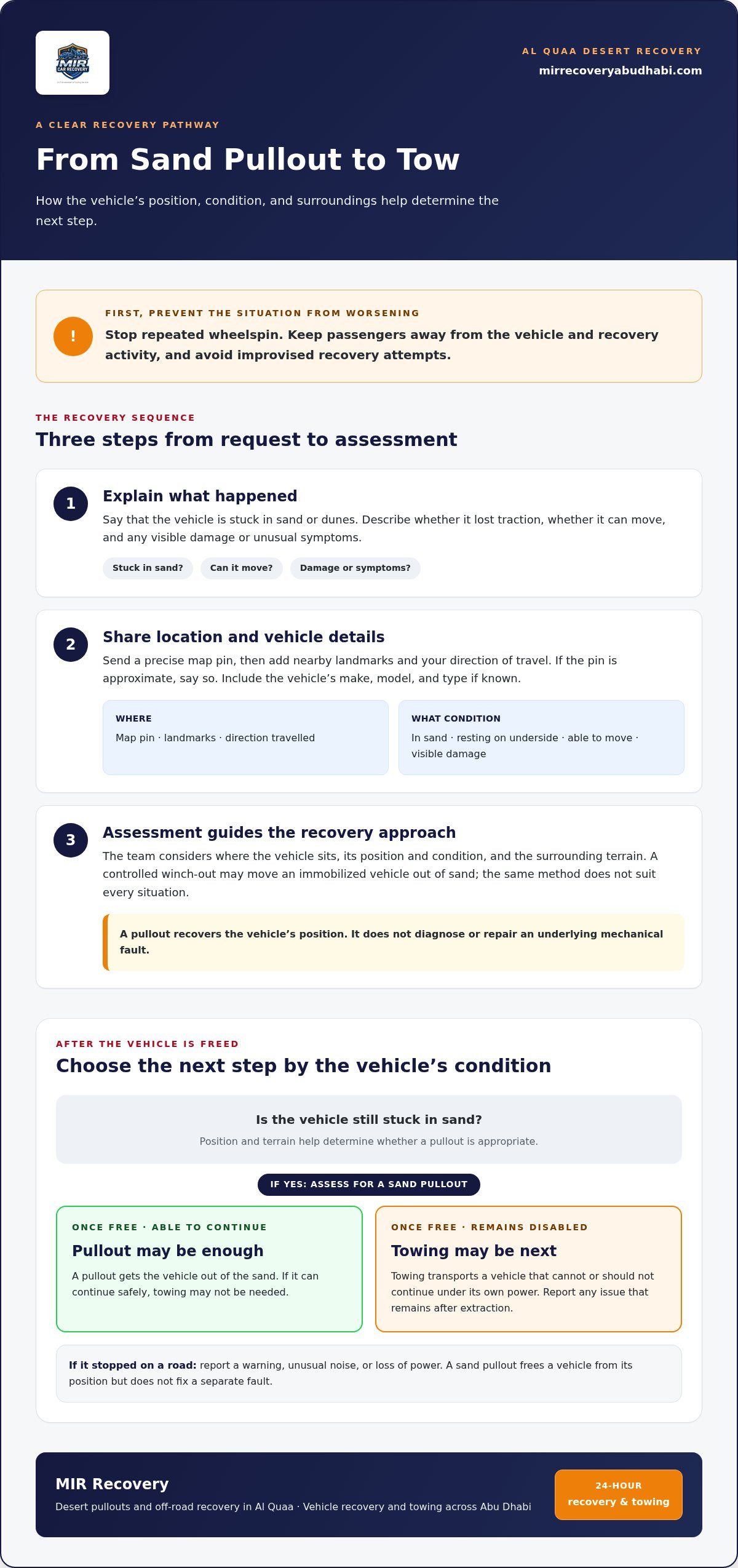
An Al Quaa desert pullout begins with the location and vehicle details, followed by an assessment of the vehicle and its surroundings. The team needs to understand whether the vehicle is immobilized in sand, has visible damage, or may also have a mechanical problem. This helps determine whether a sand recovery is appropriate and whether towing may be needed afterward. A pullout and a tow are separate steps, though both can be part of the same recovery request.
Expect the process to follow a practical sequence:
- Request recovery. Explain that the vehicle is stuck in sand or dunes and describe what happened.
- Share your details. Give the location pin, vehicle information, and a clear account of its position and condition.
- Follow instructions. Stay reachable and follow the team’s guidance while recovery is arranged and carried out.
Before choosing an approach, the recovery team assesses where the vehicle sits, how it is positioned, and whether it appears damaged or disabled. The surrounding terrain matters too. A vehicle that has lost traction may need a controlled winch-out to move it from the sand. A vehicle with a separate fault may need another next step. The same recovery method does not suit every vehicle or situation.
A winch-out is a controlled effort to move an immobilized vehicle out of sand. Its purpose is to recover the vehicle’s position, not diagnose or repair an underlying mechanical fault. Avoid trying to pull the vehicle with an improvised setup while assistance is being arranged. Tell the team about visible damage or unusual sounds, and stop attempting to drive if the wheels spin without moving the vehicle.
What information helps the team prepare?
Provide the vehicle’s make, model, and type if you know them. Describe whether it is buried in sand, resting on its underside, or able to move at all, and mention any visible damage. Send a precise location pin, add nearby landmarks when available, and provide a reachable contact number. Separate what you have observed from what you suspect, so the team gets a clear account of the situation.
When might recovery lead to towing?
After extraction, the vehicle may be able to continue, or it may remain disabled and need towing. A pullout addresses the vehicle’s position in the sand; towing transports it to a chosen destination or service location. One does not automatically mean the other. Describe any issue that remains once the vehicle is free so the next step can be based on its condition.
MIR Recovery handles desert pullouts and off-road recovery in Al Quaa, with vehicle recovery and towing across Abu Dhabi. If your vehicle is stuck or needs transport after extraction, request Al Quaa recovery assistance and share the details that help the team understand the situation.
Pullout or Towing? Choose the Right Al Quaa Recovery Outcome
A vehicle stuck in sand and a vehicle that cannot drive need different outcomes. The right option depends on what happened, the vehicle’s condition, and where it is positioned. A pullout frees a vehicle from sand; towing moves a vehicle that cannot or should not continue to another location. Sometimes both are needed, but one does not automatically mean the other.
| Situation | Likely recovery outcome | What it addresses |
|---|---|---|
| Vehicle immobilized in sand | Sand pullout | Frees the vehicle from its position so its condition can be assessed. |
| Vehicle mechanically disabled | Roadside assistance or towing, depending on the problem | Responds to the fault or transports a vehicle that cannot continue. |
| Vehicle freed but unable to drive safely | Post-pullout towing | Moves the vehicle to a chosen destination or service location. |
For an Al Quaa desert pullout, “stuck in sand” does not explain every important detail. The wheels may have lost traction, the underside may be resting on the ground, or the vehicle may have a separate fault. The recovery team considers its position, orientation, visible condition, and the space around it before choosing an approach. Careful handling can reduce avoidable strain, but no recovery method can guarantee a damage-free result.
When is a sand pullout the relevant service?
A pullout may be suitable when a vehicle appears operational but cannot move because it is immobilized in sand. Its wheel position and orientation, along with the available space around it, affect how the situation is assessed. Share what you can observe and let the recovery team determine the approach. Don’t attempt a risky self-recovery or keep forcing the vehicle to move.
Tell the recovery team if you notice damage or signs of another problem. A pullout can address where the vehicle is, but it will not fix a mechanical fault. If the vehicle was running before it became stuck, mention that, but do not assume it is safe to drive after extraction.
When should the vehicle be transported instead?
Towing may be appropriate if the vehicle remains unable to drive after it is freed. Accident damage or a persistent breakdown are also important to mention when arranging assistance. The team can assess whether the request involves extraction, transport, or both. If towing is needed, share the intended destination and explain why you do not think the vehicle can continue safely.
Keep the distinction simple: a pullout changes the vehicle’s position, while towing transports it. Explain what happened and what the vehicle can do now, rather than deciding in advance that it must be driven or towed before its condition is assessed.
What to Do While Waiting for Al Quaa Desert Recovery
Put people before the vehicle. If anyone faces immediate danger or needs urgent assistance, follow current UAE emergency guidance and contact the appropriate emergency service. Keep passengers away from moving vehicles and recovery activity. Don’t put yourself at risk trying to inspect or move the car.
Stop repeated wheelspin. It can dig the tyres deeper into the sand, while an improvised pull using an unsuitable vehicle or attachment can create further risk. Wait for professional guidance rather than trying a recovery method you are not equipped to carry out safely. Keep your phone available so the recovery team can reach you, and report any change in passenger needs or vehicle condition.
How should you describe your location to the recovery team?
Send a map pin, then describe the approach point and any visible landmark that helps distinguish your position. Say whether the vehicle is on a track, in open sand, or near dunes. If the pin is approximate, make that clear. Update the team if you move, the vehicle shifts, or you realise the location marker is inaccurate.
Keep directions factual. Don’t guess at a route or access point. A short description of what you can see and where the vehicle is positioned is more useful than uncertain directions. If you can safely identify the last recognisable point you passed, share it as an additional reference, not as a substitute for the pin.
What details should you report about the vehicle?
Give the vehicle’s make, model, and type if known, then state whether it starts or moves and whether you can see damage. Explain if it is stuck in sand or appears to have a separate breakdown. Mention passengers who need assistance and any concern that could affect safe access. Keep your callback number clear and reachable, and say when you are unsure about a detail.
Separate what you observed from what you suspect. For example, say “the engine starts, but the wheels spin without moving” rather than diagnosing a fault. If the vehicle’s position changes or a new warning sign appears, pass on that update. Concise, accurate information helps the team understand the request and prepare for the situation without relying on guesswork.
Before the recovery team arrives, stay in a safe position and follow the instructions given to you. Don’t stand near the vehicle or equipment during recovery unless the team directs you to do so. If someone is in immediate danger, contact emergency services first. A recovery request does not replace urgent emergency assistance.
For an Al Quaa desert pullout, share your location and vehicle details with MIR Recovery’s Al Quaa recovery team so they can assess the assistance you need.
Request 24-Hour Al Quaa Desert Pullout from MIR Recovery
MIR Recovery provides 24-hour vehicle recovery and towing across Abu Dhabi, including desert pullouts and off-road recovery in Al Quaa. If your vehicle is immobilized in sand, share where it is and what happened so the team can understand the assistance you need. If the vehicle has a separate problem or needs transport after extraction, include that information too.
What assistance can MIR Recovery provide?
MIR Recovery handles Al Quaa desert pullouts and off-road winch-out assistance for vehicles stuck in sand. The vehicle’s position and condition help determine the appropriate response. If it cannot drive safely after recovery, towing may be needed to transport it onward. A pullout gets the vehicle out of its stuck position; it does not repair an underlying mechanical fault or establish that the vehicle can continue its journey.
Some requests involve a different roadside problem. Battery jump-start assistance can help when the issue is a flat battery, while flat-tyre assistance addresses a tyre problem. Describe the symptoms you can observe rather than trying to diagnose a fault. That distinction helps the team understand whether you need desert recovery, roadside assistance, towing, or a combination of services.
How do you request recovery?
Share information that helps the team assess the request and locate the vehicle. Keep your description direct and factual. Include:
- Location: Send a map pin and add a visible landmark or approach point when available.
- Vehicle: Give the make, model, and type if known.
- Condition: Say whether it starts or moves, whether it is stuck in sand, and whether you can see damage.
- Contact: Provide a reachable callback number and mention any passenger or access concerns.
If your vehicle shifts position, you discover the pin is inaccurate, or access conditions change, send a concise update. Don’t guess at directions; describe what you can see. Clear updates help the team understand the current situation. If the vehicle is both stuck and disabled, say so rather than describing only the sand recovery need.
MIR Recovery’s Abu Dhabi service operates around the clock for vehicle recovery and towing. For an Al Quaa desert pullout, provide the location and vehicle details so the team can understand the assistance needed. Request Al Quaa desert recovery.
Make Your Next Move With Confidence
A desert recovery can disrupt your plans, but knowing what to share can make the next steps clearer. If you are preparing for drives near Al Quaa, keep your phone accessible and be ready to share a location pin if the vehicle becomes immobilized. Let passengers know what is happening and keep them away from recovery activity.
If you are dealing with the situation now, focus on the immediate facts: where the vehicle is, what it can or cannot do, and whether anyone needs urgent help. An Al Quaa desert pullout request gives the recovery team a clear starting point. Share updates if the vehicle moves or its condition changes, and avoid putting yourself or others at risk to move it.
MIR Recovery provides desert recovery and towing assistance in Al Quaa. Share the vehicle’s location and condition, then follow the team’s guidance. Request Al Quaa desert recovery to arrange the appropriate assistance.
Frequently Asked Questions
What should I do if my car gets stuck in Al Quaa desert?
Stop trying to accelerate if the wheels spin without moving the car. Keep passengers in a safe place and avoid standing near the vehicle if it could shift. Contact a recovery service with your location and a brief description of what happened. If anyone faces immediate danger, follow current local emergency guidance first. Don’t attempt a pull using another vehicle unless a qualified recovery professional directs you to do so.
Can a recovery team pull an SUV out of sand in Al Quaa?
Yes. MIR Recovery handles desert pullouts and off-road winch-out assistance in Al Quaa. The team assesses the SUV’s position, condition, and surroundings before choosing an approach. Share whether it starts or moves, and mention any visible damage or unusual symptoms. An SUV’s size alone does not determine the right method, and a successful extraction does not guarantee it can safely continue driving.
Is a desert pullout the same as car towing?
No. A pullout frees a vehicle that is immobilized in sand, while towing transports a vehicle that cannot continue or needs to reach another location. A driver may need both if the vehicle is extracted but remains disabled. If a warning light or damage makes driving unsafe after recovery, explain that when arranging help so the next step can be assessed.
What information should I share when requesting an Al Quaa pullout?
Give the team a map pin, a reachable phone number, and identifying details such as the vehicle’s make, model, colour, and registration plate if available. Describe what the vehicle is doing, including whether it starts, moves, or has visible damage. Mention any passenger or access concern that could affect the situation. If your pin is approximate, say so rather than presenting it as exact.
How long does an Al Quaa desert pullout take?
There is no fixed duration for every Al Quaa desert pullout. The time needed depends on the vehicle’s position and condition, the surrounding terrain, and the recovery approach required. A vehicle that is accessible and simply immobilized may present a different task from one that is badly positioned or also disabled. Share accurate details when requesting help, but don’t rely on a set recovery time.
Can I drive my car after it has been pulled out of the sand?
Continue only if the vehicle appears safe to operate. Being freed from the sand does not confirm that the tyres, underside, or mechanical systems are undamaged. If you notice a warning light, fluid leak, unusual sound, visible damage, or poor handling, stop and describe the symptoms to the recovery team. The vehicle may need towing rather than being driven onward; a pullout does not repair faults.
Does MIR Recovery provide 24-hour desert recovery in Al Quaa?
Yes. MIR Recovery provides 24-hour vehicle recovery and towing across Abu Dhabi, including desert pullout and off-road recovery assistance in Al Quaa. When requesting help, share your location pin, vehicle details, and a concise account of its condition. If the vehicle’s position changes or you discover new damage, pass on that update. The recovery approach depends on the situation and the vehicle’s condition.