Could the wrong loading angle damage a sports car before it even leaves the roadside? If your vehicle sits low, concern about scraping the front splitter or underbody is justified. Sports car recovery Abu Dhabi calls for more than a tow: a considered loading approach and careful securing help protect the vehicle during transport.
It’s reasonable to ask how recovery will be handled, especially when your car is valuable or has limited ground clearance. MIR Recovery provides specialist sports-car recovery across Abu Dhabi, using low-angle flatbed towing for low-clearance vehicles.
This guide explains what to expect from flatbed recovery, what information to share when requesting help, and how to stay safe while you wait. Give the recovery team your location, vehicle make and model, and any damage or loading concerns so they can plan around the situation.
Key Takeaways
- A breakdown, accident, or other problem can leave a sports car needing specialist recovery rather than a routine tow.
- A low-angle flatbed carries the car on a platform, helping address loading concerns associated with limited ground clearance.
- The recovery approach depends on whether the car can move safely, its condition, and the available loading space.
- When requesting sports car recovery Abu Dhabi, share your exact location, vehicle model, and whether the car can move.
- MIR Recovery provides 24-hour recovery across Abu Dhabi, including low-angle flatbed towing and careful securing for low-clearance sports cars.
When Does a Sports Car Need Specialist Recovery in Abu Dhabi?
Being stranded beside a busy road is stressful. With a low-clearance or high-value sports car, you may also be concerned about how it will be moved without putting pressure on vulnerable bodywork. A breakdown, collision, flat tyre, or other fault can leave a car unable to continue safely. In that situation, sports car recovery Abu Dhabi should account for the vehicle and roadside conditions, not treat the job as a routine tow.
Sports-car recovery means planning vehicle transport around the car’s condition, ground clearance, and loading needs. The term “sports car” covers a wide range of designs, as outlined in What is a sports car? Recovery needs vary too. The front splitter, side skirts, underbody, wheels, and ability to roll can all affect how the car should be handled.
Why low ground clearance changes the recovery approach
A low front splitter or underbody can sit close to the road. If a vehicle meets a steep ramp at an unsuitable angle, its lower body may touch the surface. The risk depends on the car’s dimensions and condition, so don’t assume that every sports car has the same ground clearance or vulnerable points.
It’s not just a matter of moving the vehicle. The loading approach matters: the recovery team needs to consider how the car meets the ramp, where it can be secured, and whether existing damage affects movement. Mention any unusually low bodywork or visible damage before loading begins.
Situations that call for professional sports-car recovery
Arrange professional recovery if a breakdown or collision leaves the car unsafe or unable to continue. A warning light alone may not tell you whether it’s safe to drive. If the vehicle has lost power, suffered visible damage, or behaves unpredictably, avoid testing it in traffic. Don’t try to push, drag, or lift a disabled car with improvised equipment. An unsuitable contact point or uncontrolled movement could worsen damage or put people at risk.
The right recovery plan depends on the car and its location. A narrow shoulder, moving traffic, confined access, or a damaged wheel can all affect handling. Share the exact location, describe access limits and the car’s condition, and say whether it can roll or steer. These details help the recovery team assess the scene and prepare for loading.
MIR Recovery provides sports-car recovery across Abu Dhabi, including low-angle flatbed towing and careful securing for low-clearance vehicles. If you’re stranded, keep yourself clear of traffic and describe the vehicle’s condition and surroundings clearly while arranging recovery.
How Low-Angle Flatbed Recovery Protects a Sports Car During Loading
A flatbed recovery vehicle carries the car on its platform instead of towing it with its wheels on the road. For a low-clearance sports car, the loading stage needs particular attention: the transition from road level to the platform can bring a front splitter or underbody close to the ramp. A low-angle approach reduces the steepness of that transition and supports a more controlled load.
Loading angle, ground clearance, and vehicle condition should guide the recovery plan. Sports cars vary in design, ride height, bodywork, and damage. A car with an intact front end may need a different approach from one with a damaged bumper, wheel, or suspension. The recovery team should assess the car and available space rather than assume one loading method suits every vehicle.
What happens during a low-angle flatbed load?
The recovery vehicle needs to be positioned so there is a suitable loading path, taking account of traffic, obstacles, and the car’s location. Once the platform is prepared, the vehicle is moved onto it in a controlled manner. The exact process depends on whether the car can roll and steer, its condition, and the access available at the roadside.
Keep the area around the car clear if it’s safe to do so, and tell the recovery team about low bodywork or visible damage. Don’t direct anyone to pull the car by a vulnerable part. An assessment before movement helps identify areas that need attention and reduces reliance on guesswork.
How careful securing supports safe transit
After loading, the vehicle must be secured appropriately so it remains stable on the platform during transport. The team should consider the car’s condition and use suitable contact points, avoiding pressure on delicate bodywork or components. If a wheel or another area is damaged, mention it before securing begins so the handling plan can account for it.
Securing does not replace careful loading. The vehicle needs to be positioned appropriately first, then restrained for the journey. Tell the recovery team about specific concerns, such as a low splitter, modified ride height, or collision damage. No transport method can promise that damage is impossible, but a considered approach helps manage avoidable risks.
For sports car recovery Abu Dhabi, low-angle flatbed towing combines platform transport with attention to clearance and careful securing. MIR Recovery provides this approach for low-clearance vehicles across Abu Dhabi. Learn about sports car recovery in Abu Dhabi and share the details that will help the team plan the loading process.
Flatbed or Other Towing: Which Recovery Approach Suits a Sports Car?
There isn’t one recovery method for every sports car. Ground clearance, whether the car can move safely, visible damage, and the space around it all affect the plan. A flatbed carries the vehicle on a platform. Other towing approaches may move it with some wheels on the road. This comparison outlines key considerations rather than giving a one-size-fits-all answer.
| Consideration | Flatbed transport | Other towing approaches |
|---|---|---|
| How the car is moved | The vehicle is carried on the recovery platform. | The vehicle may be towed with some wheels remaining on the road, depending on the approach. |
| Loading and clearance | The platform’s approach and loading path matter, especially for low front bodywork. | Clearance and the points where the car is supported or connected need consideration. |
| Vehicle condition | Can suit a car that needs to be transported on a platform, depending on access and loading conditions. | Suitability depends on whether the car can move safely and how its condition affects towing. |
When flatbed transport is a practical option
A flatbed can be a practical choice when a low-clearance vehicle needs to be carried rather than moved with its wheels on the road. Access still matters: a confined roadside position, uneven approach, or damaged bodywork can affect how the platform is positioned and the car is loaded. MIR Recovery uses low-angle flatbed towing for low-clearance vehicles, helping account for the loading transition.
Why the vehicle’s condition matters as much as its body style
A sports car that can roll and steer safely presents different handling considerations from one that is immobilised or accident-damaged. Visible damage, a wheel that cannot move normally, or restricted access may affect the recovery plan. Describe what you can see and whether the car can move, but don’t attempt a mechanical diagnosis. The recovery team can assess the situation before proceeding.
Choose the approach in response to the vehicle and roadside setting, not just its badge or body style. A flatbed may suit a low-clearance car, but space to position it and the car’s condition still matter. Other towing approaches are appropriate only when the vehicle and circumstances allow. Don’t try to reposition a disabled car to make a particular method easier.
When requesting sports car recovery Abu Dhabi, share the vehicle’s location, model, visible damage, and whether it can roll or steer. MIR Recovery provides low-angle flatbed recovery across Abu Dhabi for sports cars and other low-clearance vehicles. Learn about sports car recovery in Abu Dhabi and give the recovery team clear details so they can plan for the situation.
What to Do Before Sports Car Recovery Arrives in Abu Dhabi
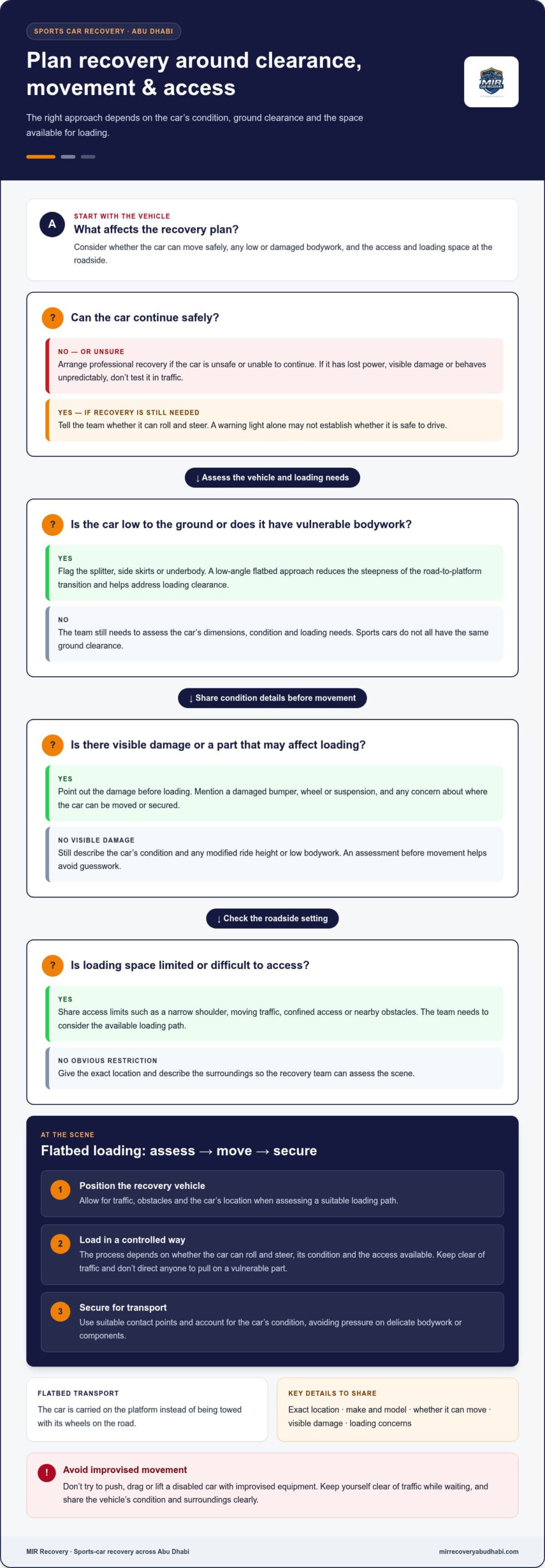
A few clear details help the recovery team plan for your car and its surroundings. Put your safety first. If the vehicle is near moving traffic, move to a safe place away from the road if you can do so without crossing traffic or putting yourself at risk. Don’t drive or reposition a car that may be unsafe.
Use this checklist when requesting sports car recovery Abu Dhabi:
- Give your exact location. Share the road name, direction of travel, nearest exit or landmark, and your position relative to it. In a car park or private access area, describe the entrance, level, clearance restrictions, and narrow turns that could affect access.
- Identify the vehicle. Give the make, model, and colour so the recovery team can identify the car. Mention low front clearance, a splitter, or other bodywork that needs care during loading.
- Describe what the car can do. Say whether it starts, rolls, or steers, but don’t test it if doing so could be unsafe. Report warning signs you’ve noticed without trying to diagnose the cause.
- Report damage and access issues. Explain any visible collision damage, a wheel that appears affected, or obstacles around the car. Be specific about the space available for the recovery vehicle.
- Follow safety instructions. Stay clear of traffic and wait in a safe place. Follow the recovery operator’s directions rather than trying to prepare a loading path yourself.
Information to share when requesting recovery
Clear information helps the team understand both the vehicle and its setting. For example, “I’m on the shoulder beyond the exit, travelling toward the city; the car is low, won’t start, and can’t roll” is more useful than giving only a general area. Add nearby landmarks and access details, especially if the car is in a basement or behind a restricted entrance.
How to prepare the vehicle without risking further damage
Don’t attempt to load, push, or lift the sports car. Keep clear of traffic, and never stand behind or beneath the vehicle while recovery work is underway. Gather the keys and vehicle details only if they’re within safe reach. If you can’t access them safely, wait and follow the operator’s instructions.
Stay aware of your surroundings while help is being arranged. Don’t stand in a live lane to take photos or inspect damage. If conditions change, such as traffic building or access becoming blocked, update the recovery team from a safe position. Share what you can observe and let the recovery professionals assess the vehicle and plan its handling.
For careful sports-car recovery across Abu Dhabi, request sports car recovery and provide the vehicle, location, and access details above. Clear communication helps the team prepare without putting you at risk.
Sports Car Recovery in Abu Dhabi with MIR Recovery
A sports car that can’t continue needs a recovery plan suited to its condition, clearance, and location. MIR Recovery provides sports-car recovery across Abu Dhabi, with a 24-hour service for vehicles that need transport after a breakdown or accident. The focus is careful handling from loading through transit, not simply moving the car from one place to another.
What MIR Recovery brings to sports-car transport
MIR Recovery uses low-angle flatbed towing for low-clearance vehicles and secures them carefully for transport. The approach takes account of the car’s clearance and condition. A vehicle with visible damage or a part that cannot move normally may need different handling from one that rolls freely. Recovery also covers disabled and accident-damaged vehicles that need transport.
Share concerns such as a low front splitter, visible bodywork damage, or limited space around the vehicle. These details help the recovery team understand the situation and plan the loading approach. No single method suits every car or roadside setting, and careful handling cannot guarantee that damage is impossible.
Request sports-car recovery in Abu Dhabi
Give the recovery team the exact location, vehicle make and model, and a clear description of its condition. Say whether it starts, rolls, or steers, and describe visible damage or access restrictions, such as a tight entrance or limited room beside the car. If you’re unsure whether it’s safe to move, don’t test it. Explain what you can observe.
Clear information supports practical planning, especially when the vehicle is low to the ground or disabled. Keep yourself away from moving traffic while arranging help, and follow the recovery operator’s instructions rather than trying to load or reposition the car yourself. MIR Recovery’s 24-hour vehicle recovery and towing service operates across Abu Dhabi, including specialist sports-car transport.
If your sports car can’t continue safely, request sports car recovery in Abu Dhabi and share your location, vehicle details, and condition so the recovery team can plan for the situation.
Make Your Next Step Clear and Safe
When a sports car can’t continue, a clear recovery request helps move things forward. Share where the vehicle is, its make and model, whether it can move, and any ground-clearance or damage concerns. These details give the recovery team a useful starting point without requiring you to assess the car yourself.
MIR Recovery provides 24-hour recovery and towing across Abu Dhabi, including low-angle flatbed towing and careful handling for low-clearance sports cars. If your car is disabled or accident-damaged, focus on staying in a safe place and describing its condition clearly. The recovery plan should be based on the vehicle’s actual needs.
For sports car recovery Abu Dhabi, choose a service equipped for careful transport. Request sports car recovery in Abu Dhabi and share your location and vehicle details. Then stay clear of traffic while recovery is arranged.
Frequently Asked Questions
Is flatbed recovery suitable for a low-clearance sports car?
Yes. Flatbed recovery can suit a low-clearance sports car because the vehicle is carried on a platform rather than towed with its wheels on the road. The loading path still matters. A car with a very low front end, for example, needs careful positioning as it moves onto the platform. Share clearance concerns when requesting sports car recovery Abu Dhabi so the team can plan around the vehicle.
Can a sports car be recovered after an accident?
Yes. MIR Recovery provides recovery and towing for accident-damaged vehicles that need transport. Don’t try to move a car if the collision has left it in an unsafe position or caused visible damage that could affect movement. Follow police or other authorities’ directions at the scene, and describe the damage when arranging recovery. Mention, for example, a wheel that appears displaced or bodywork touching the ground.
Does MIR Recovery provide sports car recovery 24 hours a day in Abu Dhabi?
Yes. MIR Recovery provides a 24-hour vehicle recovery service across Abu Dhabi, including specialist sports-car recovery. You can request recovery outside typical daytime hours if a breakdown leaves your car unable to continue. Share your location and the vehicle’s condition clearly so the team can understand the request and prepare to handle a low-clearance vehicle with care.
What information should I give when requesting sports car recovery?
Give the car’s exact location, make and model, and a clear description of its condition. Include a nearby landmark or road direction, especially if your location pin may be difficult to identify. Say whether the car starts, rolls, or steers, and mention visible damage or access limits. If it’s safe, a photo showing the vehicle’s position can help explain the situation.
Can a sports car be towed if it cannot roll?
A car that cannot roll may still need recovery, but the handling plan depends on its condition and the roadside setting. Tell the recovery team that it won’t move, and mention any damage that could affect loading. Don’t push or drag the car to make it easier to recover. The team can assess the situation and arrange suitable transport for the disabled vehicle.
Can MIR Recovery transport a sports car to a chosen destination?
MIR Recovery transports disabled or accident-damaged vehicles to designated locations. Share your preferred destination when requesting recovery, along with the car’s current location and condition. If the destination is in a secured building or restricted-access area, explain how the recovery vehicle can reach it. This helps the team understand the transport requirement and account for access at both ends of the journey.
What should I do if my sports car breaks down on a busy road?
Put your safety before the vehicle. If you can leave the car safely, move well away from moving traffic and wait in a protected place. Don’t stand behind the car or in a live lane. Contact recovery and give your road direction, nearest landmark, and vehicle details. Don’t inspect or photograph the car from an exposed position. If the situation feels immediately dangerous, contact the appropriate emergency service.